How to Stay Fit While Travelling: Simple Vacation Fitness Tips
Vacations are meant to be enjoyed. They are a time to relax, explore new places, spend time with family and friends, and take a break from everyday responsibilities.
However, many people completely stop moving once their holiday begins. After weeks or months of consistent training, a sudden change to a more sedentary routine can make returning to normal life feel much harder.
The good news is that maintaining your fitness during vacation does not require long workouts or strict routines. Small daily habits can help you stay energized, maintain your strength, and return from your holiday feeling refreshed rather than starting over.
Movement Should Be Part of Your Holiday
Your body does not need a complete break from movement — it needs a different type of movement.
A vacation is the perfect opportunity to enjoy activities that you may not normally do during your regular routine. Instead of structured gym sessions, focus on staying active naturally:
- Walking and exploring new areas
- Swimming in lakes or the sea
- Hiking and outdoor activities
- Cycling
- Playing recreational sports
- Short mobility or strength sessions
The goal is not to train with the same intensity as during your normal schedule. The goal is to keep your body active and maintain the habits that support your health.
Consistency Matters More Than Intensity
Many people think that if they cannot complete a full workout, there is no point in exercising at all.
This mindset often leads to doing nothing for several weeks.
A short 15–30 minute session can be enough to maintain momentum. A few bodyweight exercises, mobility movements, or a quick strength workout can help you stay connected with your routine.
Fitness is built through consistency, not perfection.
Enjoy Your Vacation Without Extreme Restrictions
A healthy lifestyle should give you flexibility.
Enjoying local food, having a few extra treats, or changing your usual schedule is a normal part of travelling. The problem is not occasional relaxation — the problem is losing all structure.
Try to maintain a few simple habits:
- Stay physically active every day
- Prioritize protein-rich meals when possible
- Stay hydrated
- Get enough sleep
- Avoid spending the entire day sitting
Small decisions throughout the day add up.
Rest Is Important — But Complete Inactivity Can Make You Feel Worse
Quality rest is essential for recovery, but too much inactivity can sometimes leave you feeling tired, stiff, and less energetic.
Many people notice that after several days of minimal movement they experience:
- Reduced energy levels
- Stiffness and poor mobility
- Lower motivation
- Difficulty returning to their normal routine
Light activity during your vacation can actually improve relaxation, mood, and overall well-being.
Add Short Training Sessions During Your Holiday
You do not need long workouts to maintain your fitness while travelling.
One or two short training sessions per week can help you stay active, maintain strength, improve your energy levels, and most importantly — keep the habit of regular movement.
The goal during vacation is not to replace your normal training routine. It is simply to give your body enough activity to maintain your progress while still allowing you to relax and enjoy your time away.
A simple full-body circuit workout can be completed almost anywhere — at home, outdoors, in a hotel, or during your holiday trip.
Simple Full-Body Holiday Workout
Perform each exercise for 45 seconds, followed by 15 seconds of rest.
Complete 4–6 rounds depending on your fitness level, with approximately one minute of rest between rounds.
For exercises performed on one side of the body, complete one round on each side.
Exercises:
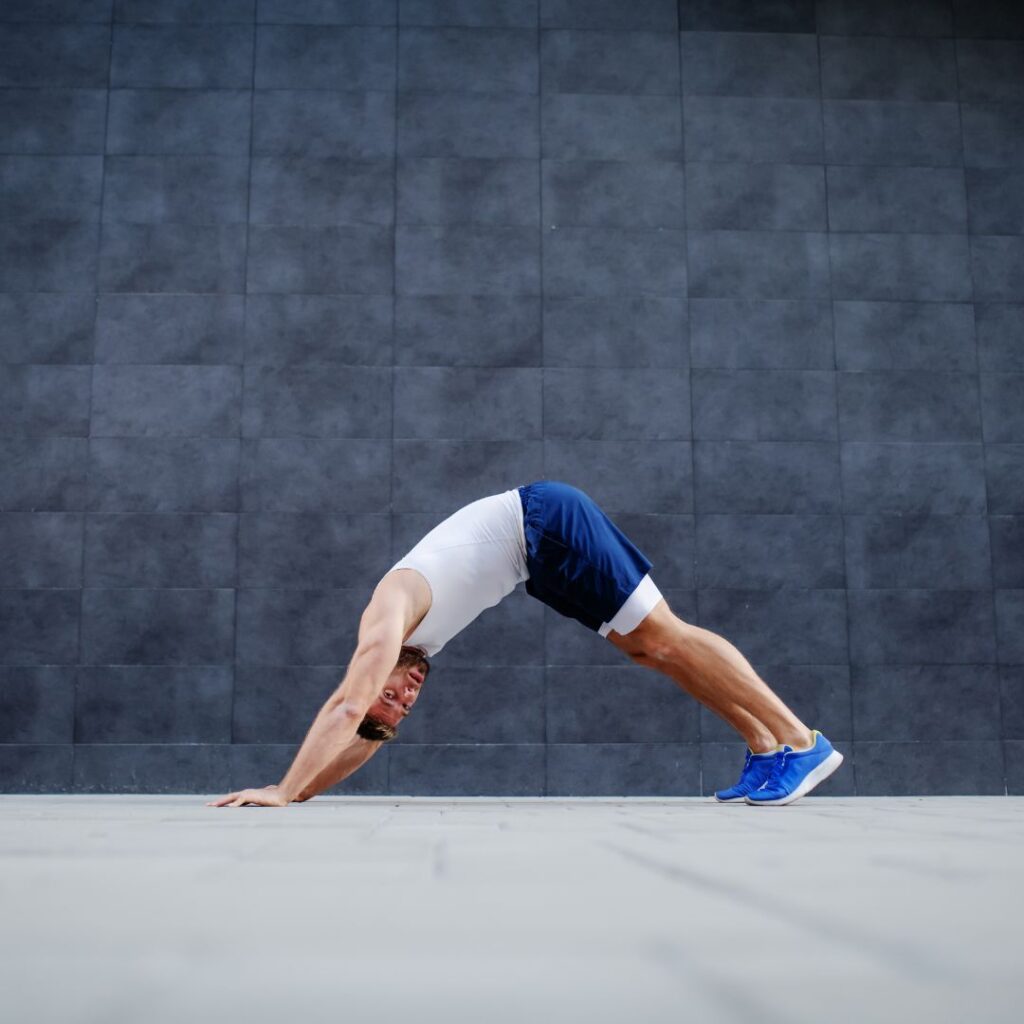
Inchworm
The inchworm is a simple but effective exercise that improves mobility, flexibility, and full-body control. It is a great movement to include during warm-ups or holiday workouts because it activates multiple muscle groups at the same time.
Start standing with your feet approximately shoulder-width apart. Slowly bend forward and place your hands on the floor while keeping your legs as straight as possible.
Walk your hands forward until you reach a high plank position. Keep your core engaged, maintain control, and pause briefly before walking your hands back toward your feet.
Return to the standing position and repeat the movement for the required number of repetitions or time interval.
Jump rope
Stand up and pick up the rope. Extend your hands and forearms at least a foot away from your body, at a 45-degree angle. This will create a larger arc for you to jump through.
Use your hands and wrists to swing the rope over your head. Don’t move your arms — try to keep the motion limited to your wrists.
If you don’t have a jumping rope or can’t learn how to jump over it, you can do the same movement without a rope.
Also, exercises like low skip will have similar effects on your body.

Kettlebell swings
Kettlebell swings are a powerful full-body exercise that develops strength, coordination, and cardiovascular fitness. This movement focuses mainly on the glutes, hamstrings, and hips while also engaging the core and upper body.
Start by standing with your feet slightly wider than shoulder-width apart while holding the kettlebell with both hands. Push your hips back, slightly bend your knees, and allow the kettlebell to move between your legs.
Drive your hips forward explosively to swing the kettlebell upward while keeping your back straight and your core engaged. The movement should come from your hips, not from pulling with your arms.
Control the kettlebell as it returns and repeat the movement with a consistent rhythm.

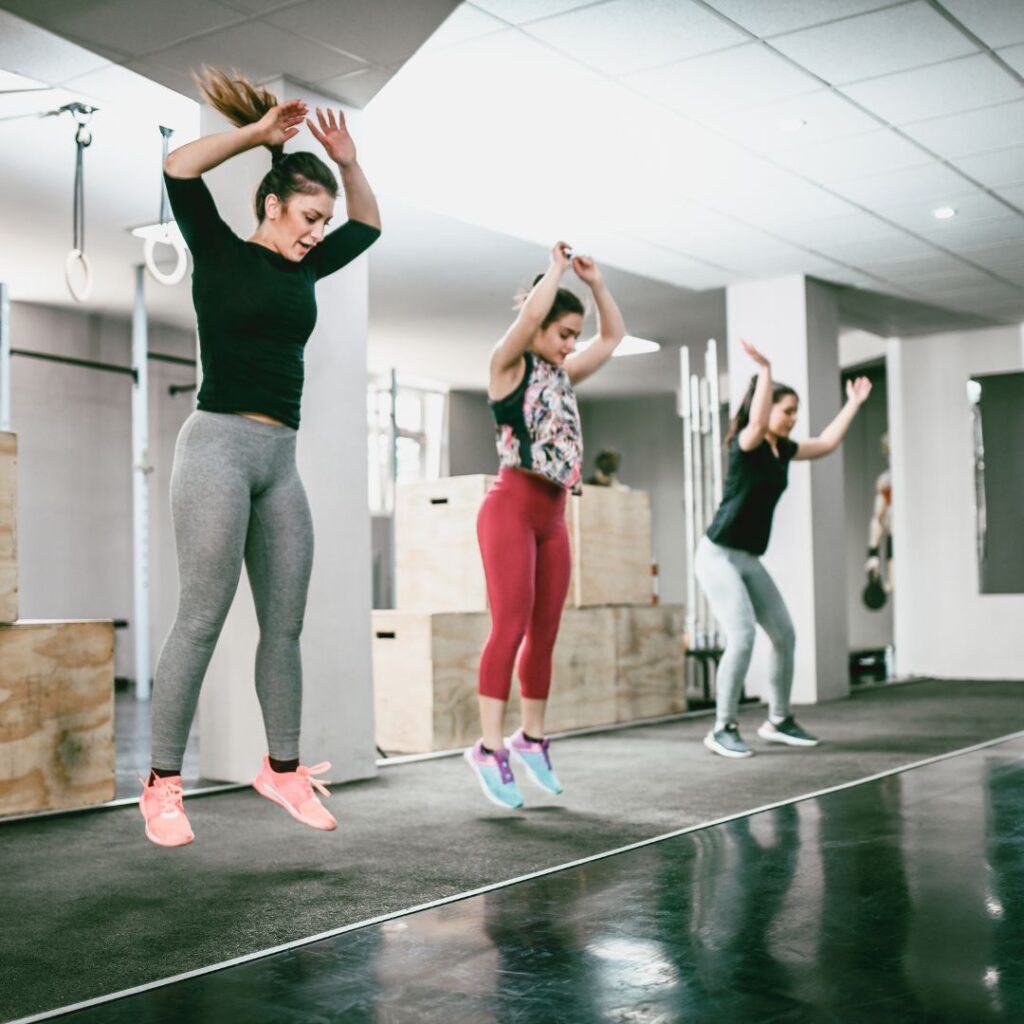
Jumping jack
Jumping jacks are a simple but effective cardio exercise that increases heart rate, improves coordination, and adds intensity to any workout. They require no equipment, making them a perfect option for training while travelling.
Start standing upright with your feet together and your arms by your sides. Jump while moving your feet outward and raising your arms above your head at the same time.
Land softly with control, then jump back to the starting position by bringing your feet together and lowering your arms.
Maintain a steady pace throughout the exercise and focus on controlled breathing. This movement helps improve endurance and keeps your workout dynamic and engaging.
Glute bridge
The glute bridge is an effective lower-body exercise that strengthens the glutes, improves hip stability, and activates the muscles responsible for supporting healthy movement patterns.
Start by lying on your back with your knees bent and your feet flat on the floor. Place your arms beside your body and keep your core lightly engaged.
Push through your heels and lift your hips upward until your body forms a straight line from your shoulders to your knees. Squeeze your glutes at the top of the movement while avoiding excessive arching in your lower back.
Slowly lower your hips back to the starting position and repeat with controlled movement.

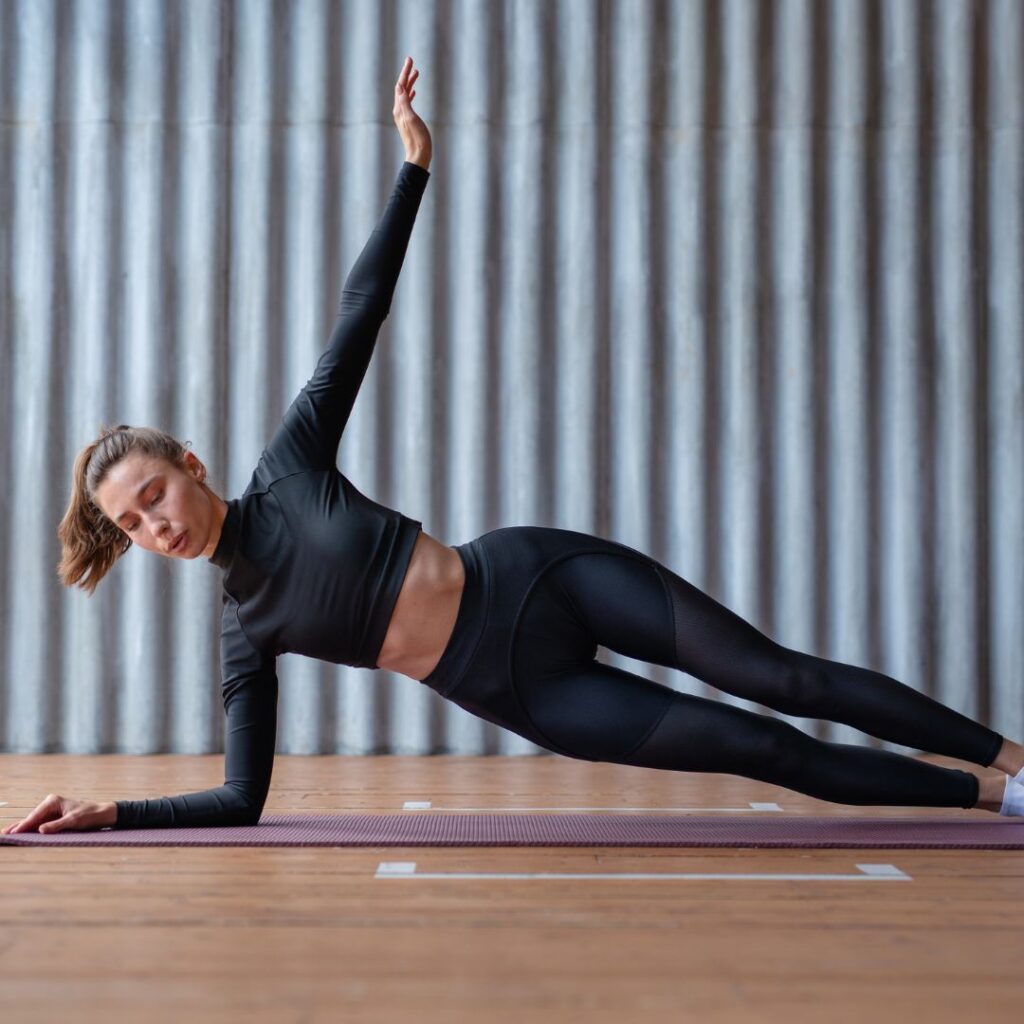
Side plank
The side plank is an excellent exercise for building core strength, improving stability, and developing better control of your body. It mainly targets the oblique muscles, but it also activates the shoulders, hips, and deep core muscles that support proper posture.
Start by lying on your side with your legs extended and your elbow positioned directly under your shoulder. Lift your hips off the ground, creating a straight line from your head to your feet.
Keep your core tight, avoid letting your hips drop, and maintain a stable position throughout the exercise. Hold the position for the recommended time, then switch to the opposite side.
This exercise is especially useful for improving balance, body control, and overall core stability.